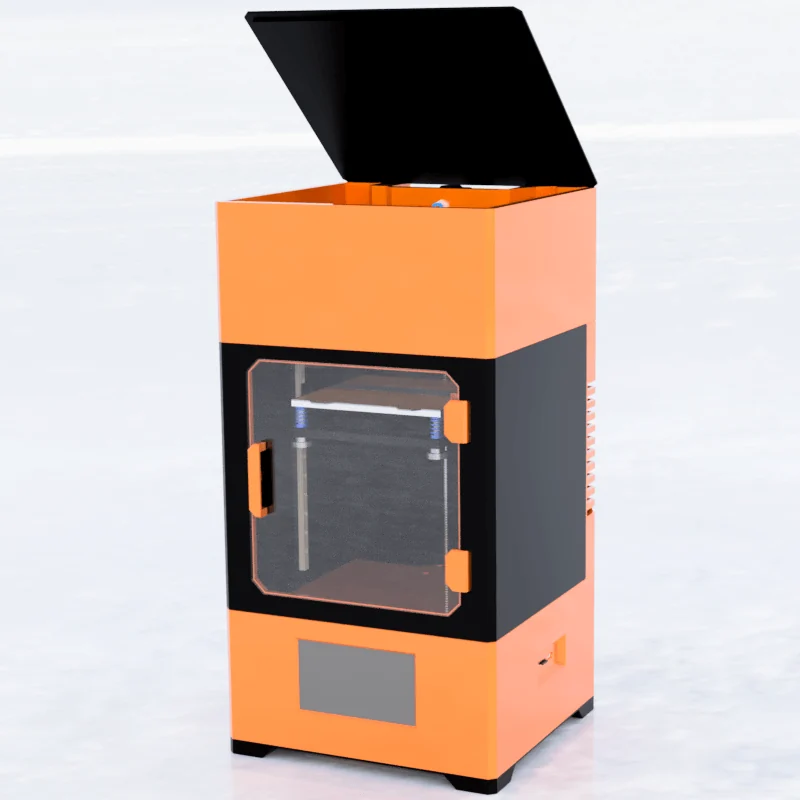
The Fenrir CoreXY is a compact, mostly 3D-printed CoreXY 3D printer. Instead of an aluminium-extrusion frame, Fenrir's frame is printed, with the walls built into the frame structure, which makes it a rigid, fully enclosed machine. The goal: a printer that is both accessible to build and genuinely performant.
Status: in development. No files are published yet. When the design is solid and properly tested, the files will be released on TinkerAtlas, and Patreon supporters will hear about it first.
What is Fenrir?
Fenrir is MakerViking's compact, open-source CoreXY 3D printer with a mostly 3D-printed frame. The walls are part of the frame, so there are no aluminium extrusions and the printer is fully enclosed. It has a 120 × 120 mm bed (the same as a Voron V0), a planned Z height of 150–170 mm that is not finalized yet, LDO linear rails on all axes, an Orbiter 2.0 extruder, an E3D Revo Micro hotend and Klipper firmware. The estimated cost is about US$600 and the build difficulty is intermediate. Fenrir is still in development, and the files will be released on TinkerAtlas.
Technical Specifications
Fenrir is a CoreXY printer with a 120 × 120 × 150–170 mm build volume (Z height not finalized), NEMA14 A/B motors, LDO rails on every axis and Klipper firmware, at an estimated cost of about US$600. Its 120 × 120 mm bed matches the Voron V0, which the official Voron Design repository lists with a 120 × 120 × 120 mm build volume.
Key Features
Fenrir's main features are a printed frame with integrated walls, automatic filament loading with the Orbiter 2.0, a slide-in Revo Micro hotend mount for quick service, and electronics you reach from a removable back lid.
Integrated Printed Frame
- Fenrir's frame is 3D printed with the walls built into the structure, so it needs no aluminium extrusions
- Each main section is split in two for easier printing with fewer supports
- Split parts allow two-colour builds, so you can make it your own
- Beefed-up parts and nut bars on the Y and Z rails for rigidity
Automatic Filament Loading
- Fenrir's filament loading is automatic, using the Orbiter 2.0 extruder with the Orbiter filament sensor
- Automatic loading, plus a button for unloading
Serviceable Hotend Assembly
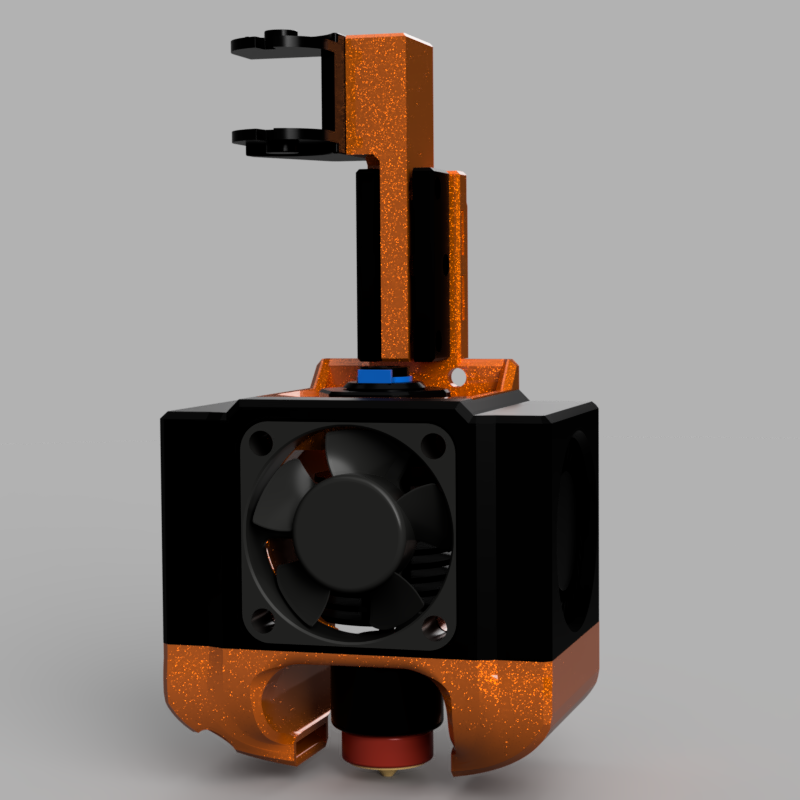
- Fenrir's hotend is an E3D Revo Micro tool head that slides into its mount, which has the cable chain built in
- Slide-in mount locked by a grub screw for quick hotend service
- Tool heads planned for other popular compact hotends
Easy-Access Electronics
- Fenrir's mainboard is behind a removable back lid, not under the printer
- Ducted fan cooling for the A/B motors
Design Story
Fenrir is the result of years of iteration, from the first prototype parts in 2021 to the stiffened, enlarged frame of 2023. It started with a strict rule: every part had to fit on a Prusa MK3. The first prototype parts (back panel, bed frame, door lip, hinges, filter holder) were printed in 2021, and the design was shown in several colour schemes, because the idea is that every builder prints it in their own colours.
In 2022 the planned Mellow board was discontinued, so the electronics were redesigned, and the extruder was upgraded to the Orbiter 2.0. LDO rails and parts arrived, a ducted fan bracket was added for the NEMA14 motors, and the toolhead was rebuilt around the E3D Revo Micro. Later that year the largest parts were split in two so they were easier to print, and the mainboard moved behind the back lid.
Splitting the parts removed the MK3 size limit, so in 2023 Fenrir grew by a few centimetres. The parts were made much beefier, the door got taller, and the depth increased so the Orbiter no longer sticks out the back. More than 600 hours have gone into the Fusion 360 design alone, as I wrote in my 2023 Fenrir post on r/3Dprinting.
In 2026 the final clearance and angle tweaks are being reprinted and verified before release.
BOM / Parts Summary
The main parts of Fenrir are LDO linear rails, NEMA14 motors, an Orbiter 2.0 extruder, an E3D Revo Micro hotend and a compact Klipper mainboard, with printed parts in HTPLA. The full BOM will be published with the release on TinkerAtlas. Main parts:
- LDO linear rails (all axes)
- NEMA14 motors for the A/B axes
- Orbiter 2.0 extruder + Orbiter filament sensor
- E3D Revo Micro hotend
- Heated bed with flex plate
- Compact Klipper mainboard
- Printed parts in HTPLA
Build Status
Fenrir is in development: the final clearance and angle tweaks are being reprinted and verified in 2026, and the next step is the release on TinkerAtlas.
- 2021: first prototype parts printed; colour variants shown
- 2022: Orbiter 2.0, electronics redesign, LDO parts, Revo Micro tool head, parts split, mainboard moved behind the back lid
- 2023: printer enlarged, parts stiffened, nut bars added
- 2025–2026: active again; final design changes being reprinted and verified
- Next: release on TinkerAtlas
General Guidance
Calibration is the first job after building a CoreXY Klipper printer like Fenrir: calibrate input shaping and pressure advance first, then keep the belts tensioned and the rails clean.
These are general starting points for CoreXY/Klipper printers, not Fenrir-specific tested profiles. Tuned profiles will come with the release.
- Run Klipper's input shaping and pressure advance calibration after the build
- Check belt tension and keep the linear rails clean and lightly lubricated
Fenrir vs Voron V0.2 vs Bambu Lab A1 mini
The three small-format printers compared here are Fenrir, the Voron V0.2 and the Bambu Lab A1 mini; all are small-format printers, but Fenrir and the V0.2 are open-source CoreXY builds, while the A1 mini is a pre-assembled commercial bed slinger.
| Fenrir | Voron V0.2 | Bambu Lab A1 mini | |
|---|---|---|---|
| Build volume | 120 × 120 × 150–170 mm (Z not finalized) | 120 × 120 × 120 mm | 180 × 180 × 180 mm |
| Kinematics | CoreXY | CoreXY | Bed slinger |
| Frame | Mostly 3D printed, walls integrated, enclosed | 1515 aluminium extrusions, enclosed chamber | Steel + extruded aluminium |
| Hotend | E3D Revo Micro | E3D Revo Voron (LDO kit) | All-metal, up to 300 °C |
| Firmware | Klipper | Klipper | Bambu Lab firmware |
| Open source | Yes (files coming to TinkerAtlas) | Yes (Voron Design GitHub) | Commercial product |
| Price / status | ~US$600 est.; in development | Kit; price varies by vendor | US$199 (US store, Oct 2026); shipping |
Sources: Fenrir specs from this page; Voron V0.2: Voron-0 repository (build volume, CoreXY, enclosed, Klipper) and LDO V0.2-S1 kit BOM / LDO V0.2 kit docs (1515 frame, Revo Voron); A1 mini: Bambu Lab tech specs and Bambu Lab US store (bed slinger, price).
Latest update (October 2026)
Fenrir's status as of October 2026 is in development: the final clearance and angle tweaks are being reprinted and verified, and no files are published yet. The build volume remains 120 × 120 × 150–170 mm, with the final Z height not finalized. The next step is the release on TinkerAtlas, and Patreon supporters will hear about it first. This month I also added a gallery of renders and prototype photos from 2021 to 2023 to this page.
About the designer
Fenrir is designed by Thomas Haugen (MakerViking), a Norwegian maker and a Top 1% designer on Thangs. He also builds open-source maker software: his parametric CAD app SindriCAD won a third prize in Snapmaker's U1 Innovation Fund, Phase 1 in 2026. Fenrir alone has taken more than 600 hours of Fusion 360 design work.
FAQ
What is the Fenrir CoreXY? Fenrir is a compact, mostly 3D-printed CoreXY 3D printer by MakerViking, with a 120 × 120 mm bed, LDO linear rails, an Orbiter 2.0 extruder and Klipper firmware.
What is Fenrir's build volume? 120 × 120 × 150–170 mm. The final Z height depends on the hotend and is not finalized yet.
Are the Fenrir files available? Not yet. Fenrir is in development, and the files will be released on TinkerAtlas once the design is solid and properly tested. Patreon supporters hear about it first.
How much does Fenrir cost to build? The estimated cost is about US$600, and the build difficulty is intermediate.
What material should I print Fenrir's parts in? HTPLA; Polymaker HTPLA is recommended.
Which hotend and extruder does Fenrir use? An E3D Revo Micro hotend with an Orbiter 2.0 direct-drive extruder and the Orbiter filament sensor. Tool heads for other popular compact hotends are planned.
Gallery
Fenrir's gallery is a timeline of renders and photos showing how the printer developed, from the first printed prototype parts in 2021 to the stiffened, enlarged frame in 2023.
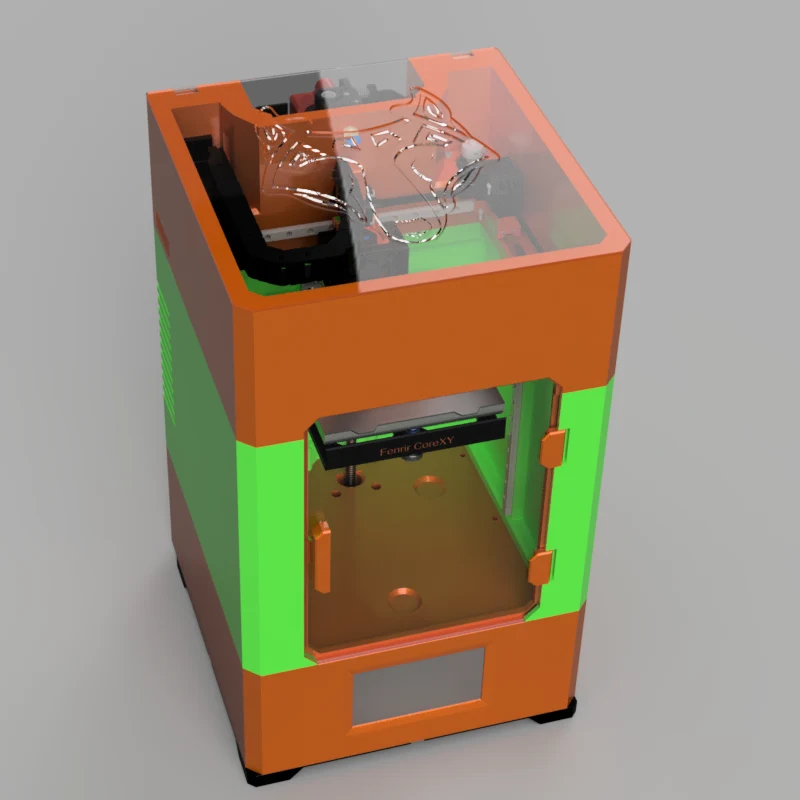 Render of the stiffened, enlarged Fenrir frame (Sep 2023 design)
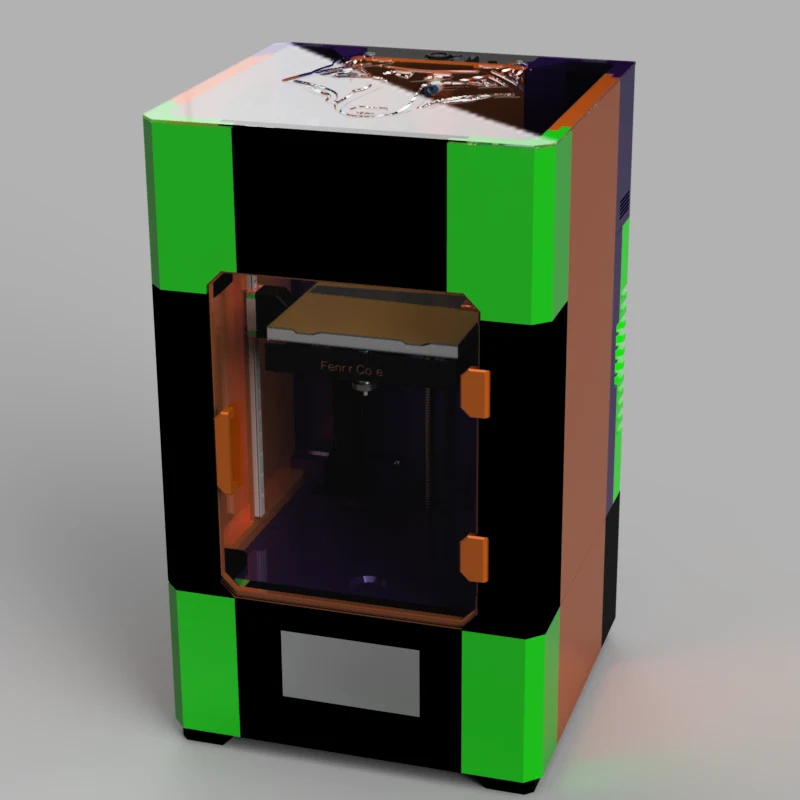 Render of Fenrir with split parts shown in contrasting colours (Apr 2023)
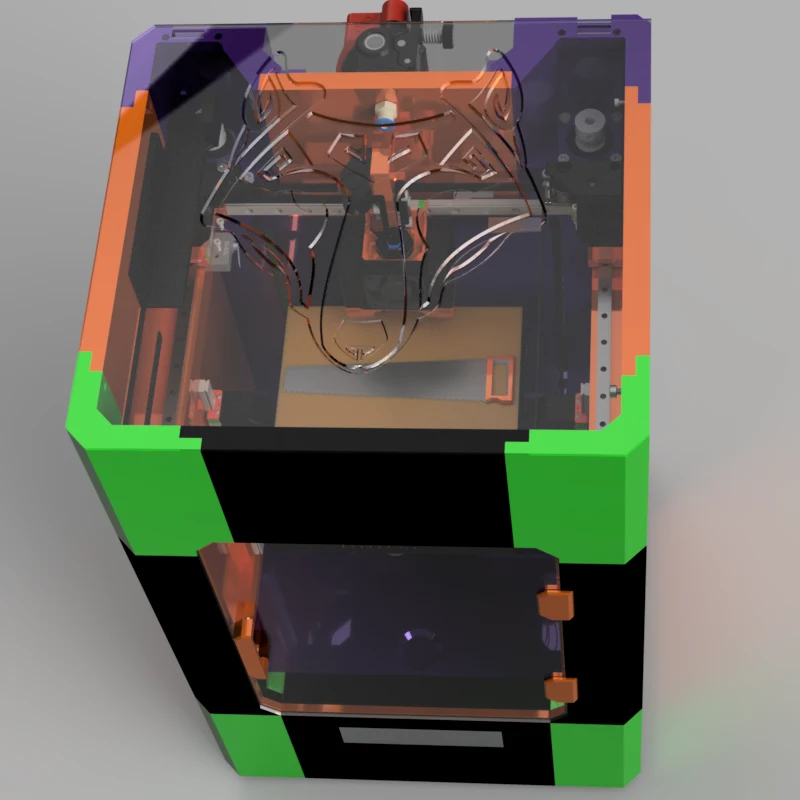 Render of Fenrir with split parts shown in contrasting colours (Apr 2023)
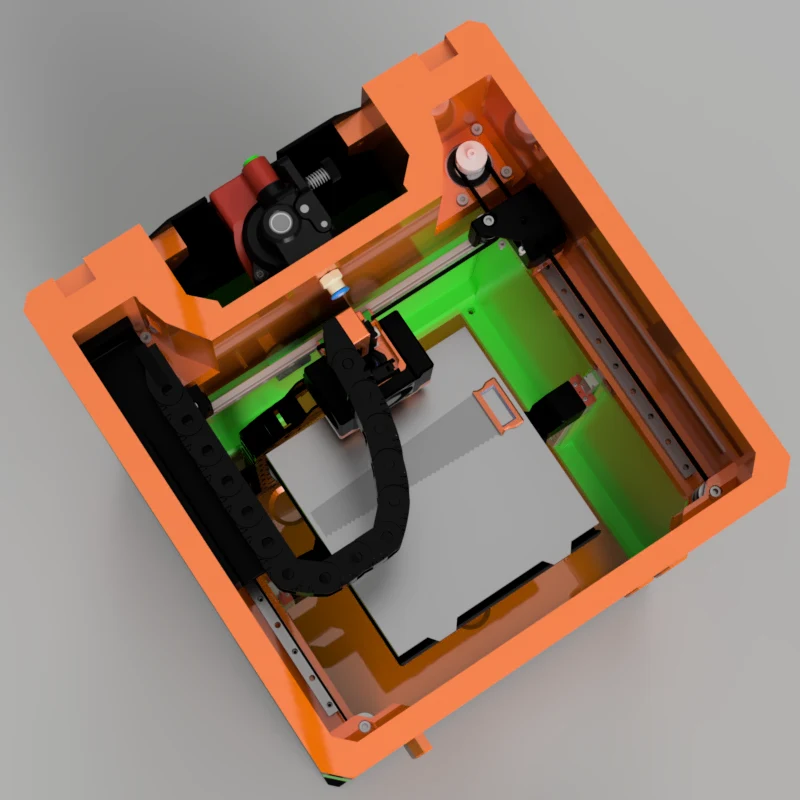 Render of the stiffened, enlarged Fenrir frame (Sep 2023 design)
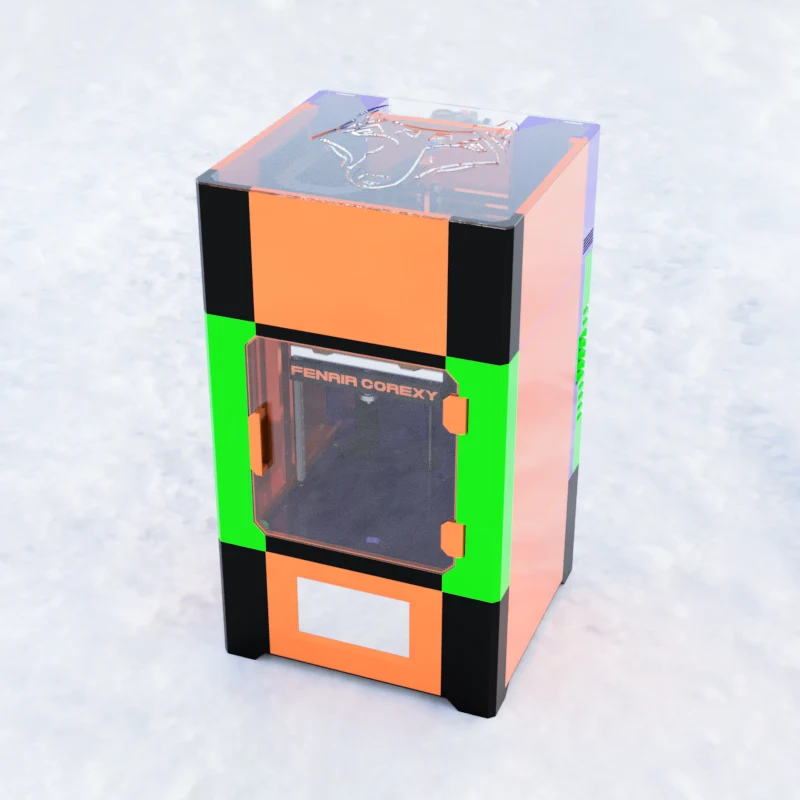 Render of Fenrir after splitting parts into smaller printable pieces (Feb 2023)
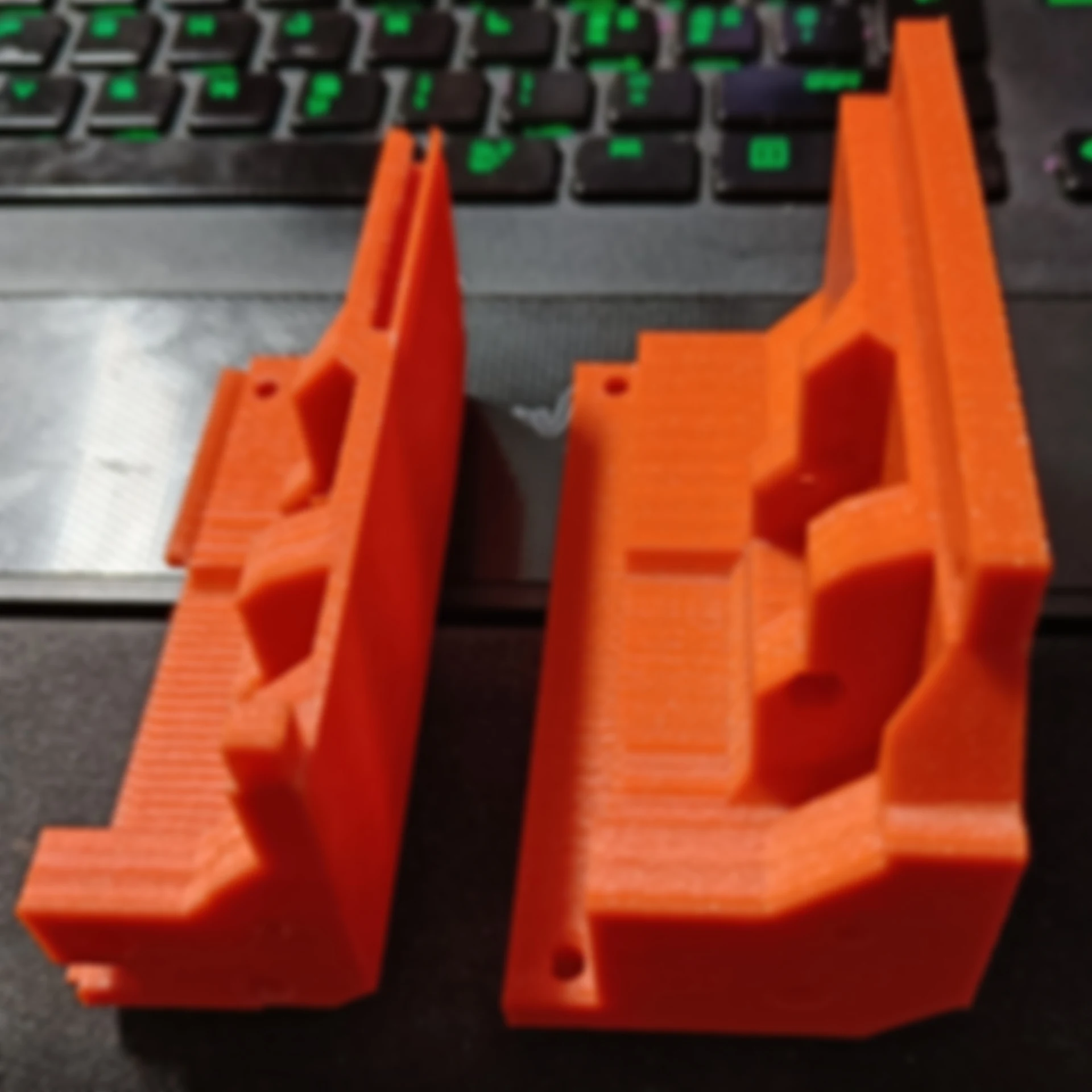 Printed Fenrir prototype parts: old vs. new beefier versions
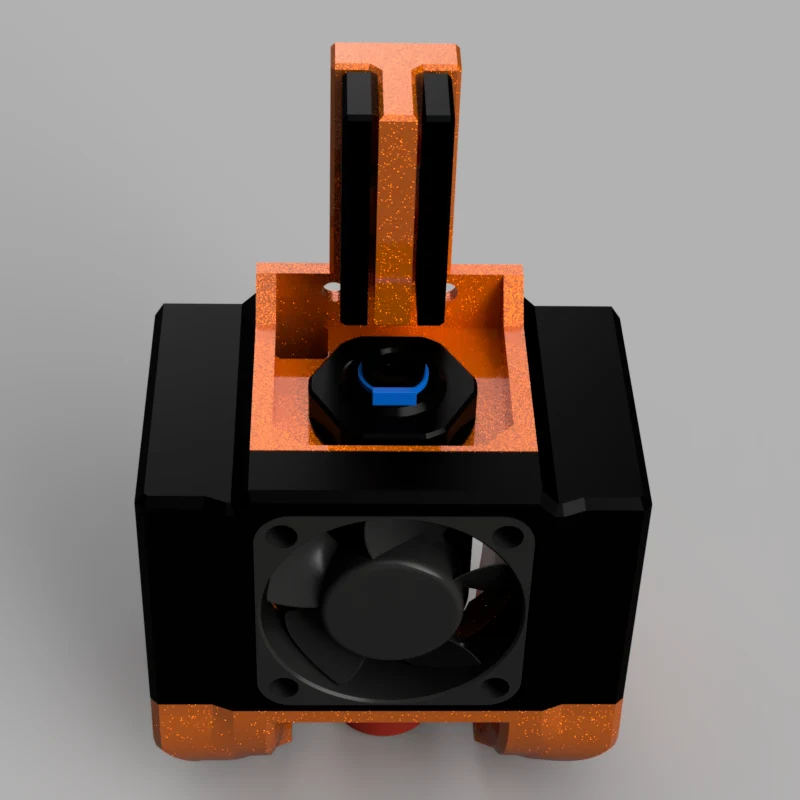 Render of the new E3D Revo Micro hotend assembly for Fenrir
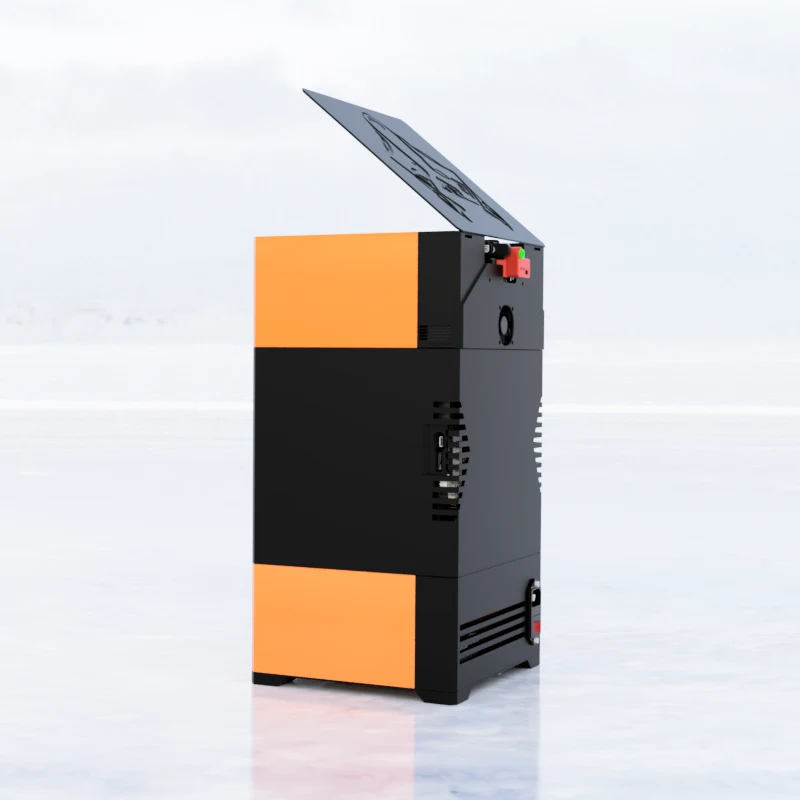 Render showing the Fenrir mainboard moved behind the removable back lid
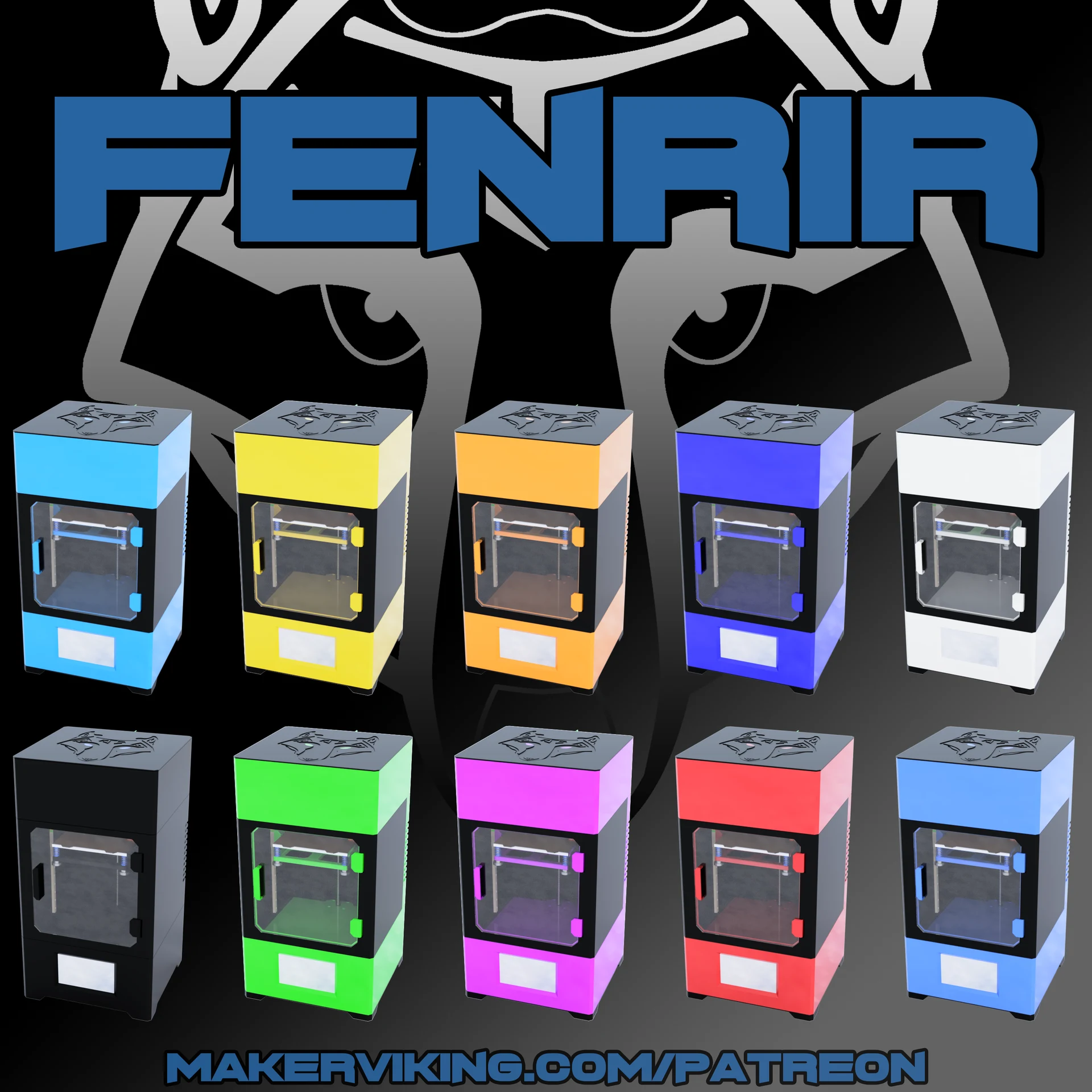 Fenrir colour variants: print it in your own colours
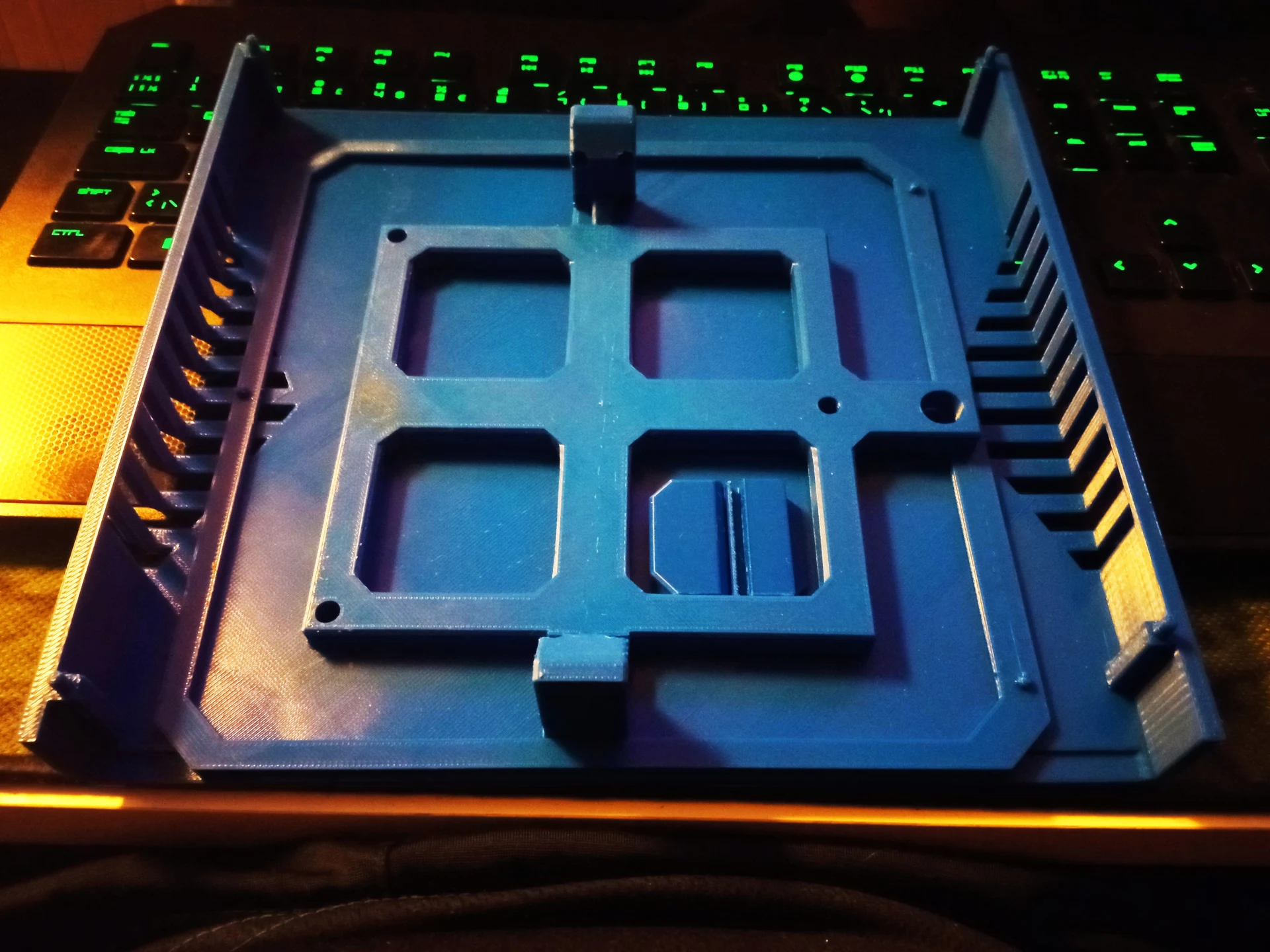 First printed Fenrir prototype parts (Nov 2021)
Downloads & Support
Fenrir's files are not released yet; they will be published on TinkerAtlas, and you can follow and support the project on Patreon.
- Files: not released yet; they will be published on TinkerAtlas
- Follow progress and support the project: Patreon
Gallery
Fenrir CoreXY 3D printer render
Fenrir hotend assembly with the E3D Revo Micro
Render of the stiffened, enlarged Fenrir frame (Sep 2023 design)
Render of Fenrir with split parts shown in contrasting colours (Apr 2023)
Render of Fenrir with split parts shown in contrasting colours (Apr 2023)
Render of the stiffened, enlarged Fenrir frame (Sep 2023 design)
Render of Fenrir after splitting parts into smaller printable pieces (Feb 2023)
Printed Fenrir prototype parts: old vs. new beefier versions
Render of the new E3D Revo Micro hotend assembly for Fenrir
Render showing the Fenrir mainboard moved behind the removable back lid
Fenrir colour variants: print it in your own colours
First printed Fenrir prototype parts (Nov 2021)
Additional Resources
Ymir 3D Printer
Ymir is MakerViking's large-format 650 × 650 × 700 mm open-source printer, being redesigned to CrossXY.
Read the Ymir wiki →CoreXY 3D printers explained
CoreXY is a motion system where two fixed motors move the print head in X and Y through crossed belts.
Learn about CoreXY →Fenrir on TinkerAtlas
TinkerAtlas is where Fenrir's files will be published when the design is released.
Follow on TinkerAtlas →